Oklahoma Reports Fast, Your Home State Acts Slow
You were convicted of DUI in Oklahoma but hold a license from another state. Oklahoma's Department of Public Safety transmitted your conviction record to your home state through the Driver License Compact within 10 business days of the court finalizing your case. You checked your home-state driving record online two weeks later and saw nothing. You assume you have time to figure out what happens next. You do not.
The gap between Oklahoma's transmission and your home state's visible action is not a grace period. It is a processing delay. Your home state received the conviction data through the National Driver Register and AAMVA's Problem Driver Pointer System within days of Oklahoma's transmission. The delay you are seeing is administrative processing time before your home-state DMV posts the conviction to your public-facing record and issues suspension or other consequences. That window typically runs 30 to 90 days depending on your home state's workload, but the conviction is already in their system.
Compare car insurance rates in your state
Get quotes from licensed carriers — no obligation, no spam, results in minutes.
Get Your Free QuoteOklahoma DLC Transmission Window
10 business days
Oklahoma DPS transmits out-of-state conviction data to the driver's home state through the Driver License Compact and AAMVA reporting systems within 10 business days of conviction finalization. The home state receives the data immediately but processing time varies.
Oklahoma DPS Driver License Services, AAMVA DLC reporting standards
What Actually Happens Between Transmission and Home-State Action
Oklahoma reports your conviction electronically through two parallel channels: the Driver License Compact reporting network and AAMVA's Problem Driver Pointer System. Both systems transmit conviction codes, dates, and court identifiers to your home-state DMV within 10 business days of Oklahoma's court finalizing the case. Your home state's DMV receives this data in a batch queue alongside thousands of other driver records from all DLC member states.
Your home state then processes the conviction under its own statutes. If your home state treats out-of-state DUI convictions the same as in-state convictions—and 44 of the 45 DLC member states do—the DMV will impose the same suspension period, point assessment, and reinstatement requirements it would impose for a local DUI. Processing time varies by state staffing levels and record volume, but the median window is 45 days from Oklahoma's transmission to your home state posting the conviction and mailing notice.
You will not receive advance warning from Oklahoma. Oklahoma's transmission obligation ends when it sends the data. Your home state controls all communication about consequences. Most states mail a notice of suspension or point assessment to the address on file with your home-state DMV, not the address you gave Oklahoma's court. If you moved recently and did not update your home-state license address, you may miss the notice entirely and discover the suspension only when pulled over or at license renewal.
The conviction is in your home state's system before you see it on your public record. Waiting for visible confirmation wastes the window to act.
Two States, Two Suspension Tracks Running Simultaneously
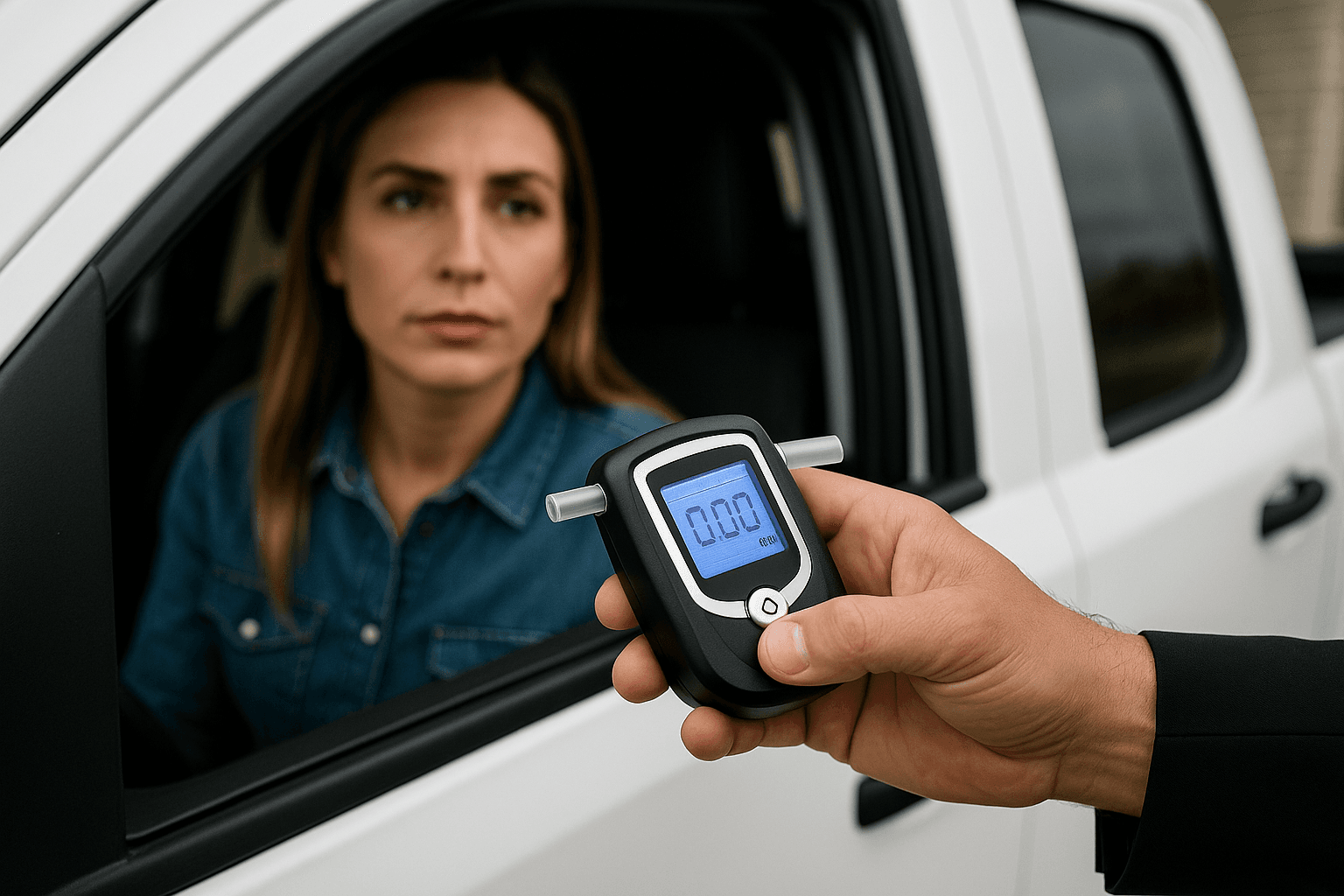
Oklahoma's administrative license suspension under 47 O.S. § 6-205.1 (implied consent revocation) began the day DPS received the arresting officer's sworn report, typically within 24 hours of arrest. That suspension runs for 180 days for a first-offense DUI refusal or 30 days minimum before a Modified Driver License becomes available for a first-offense DUI with test failure. This suspension applies to your privilege to drive in Oklahoma, regardless of which state issued your license. If you do not live in Oklahoma and do not plan to drive there, this suspension has limited practical impact beyond the initial stop.
Your home state's suspension is based on the court conviction Oklahoma reported through DLC. The suspension period, point assessment, SR-22 requirement, and reinstatement process are all governed by your home state's statutes, not Oklahoma's. If your home state treats out-of-state DUI convictions as equivalent to in-state convictions, you face the same suspension length and reinstatement conditions you would face for a DUI committed in your home state. Reinstatement requires satisfying your home state's DMV requirements—paying their reinstatement fee, filing SR-22 if required, completing any mandated alcohol education, and clearing all court-ordered obligations in Oklahoma.
Related Articles




What You Must Do Before Your Home State Posts the Conviction
Contact your home-state DMV driver services division within 10 days of your Oklahoma conviction and request a courtesy hold or administrative review. Not all states offer this, but states including California, Texas, Illinois, and Florida allow drivers to request pre-suspension review when an out-of-state conviction is pending. This does not stop the suspension, but it may delay the effective date long enough for you to arrange SR-22 coverage, complete required alcohol education, or apply for a restricted license before the suspension takes effect.
File SR-22 with your home state immediately if your home state requires it for DUI convictions. Do not wait for suspension notice. Most states require continuous SR-22 coverage for three years following DUI-related reinstatement. If your SR-22 filing lapses at any point during that period, your home state will re-suspend your license administratively, and you will restart the filing clock. Carriers licensed in your home state can file SR-22 electronically with your home-state DMV the same day you purchase the policy. Non-owner SR-22 policies are available if you do not own a vehicle.
Update your address with your home-state DMV if you moved recently. Suspension notices go to the address on file, not the address you gave Oklahoma's court. Missing the notice does not stop the suspension from taking effect, but it does eliminate your ability to apply for a restricted license or arrange reinstatement logistics before the suspension starts. Most states allow online address changes through the DMV web portal; processing time is typically 5 to 10 business days.
Complete Oklahoma's court-ordered requirements even if you do not live in Oklahoma. Your home-state DMV will not lift its suspension until Oklahoma confirms you satisfied all court conditions, including fines, victim impact panels, and alcohol assessment. Oklahoma courts report compliance back through the same DLC channel they used to report the conviction. If Oklahoma's court shows outstanding obligations when your home state checks, reinstatement in your home state will be denied regardless of whether you satisfied your home state's own requirements.
Home-State DMV Processing Window
30–90 days
Most state DMVs post out-of-state DLC convictions to the driver's public record and issue suspension notices 30 to 90 days after receiving the data from the reporting state. High-volume states including California, Texas, and Florida trend toward the longer end; smaller states process faster.
AAMVA DLC processing standards, state DMV administrative timelines
Reinstatement Splits Between Oklahoma and Your Home State
Reinstating your driving privilege after an out-of-state DUI requires satisfying both states. Oklahoma must confirm you completed all court-ordered conditions—fines, assessments, classes, community service, and any probation terms. Your home state must confirm you satisfied its own suspension requirements—reinstatement fee payment, SR-22 filing if required, alcohol education completion if mandated by your home state (not Oklahoma's education requirement), and proof of insurance. Neither state will lift its hold until both sets of conditions are met.
The practical sequence: satisfy Oklahoma's court first, then petition your home state for reinstatement. Oklahoma's court will issue a compliance letter or clearance notice once you complete all obligations. Request this document in writing from the court clerk, not from Oklahoma DPS. Your home-state DMV requires this clearance as proof you resolved the underlying conviction before it will process reinstatement. Without Oklahoma's clearance, your home state treats the conviction as unresolved and denies reinstatement even if you paid your home state's reinstatement fee and filed SR-22.
Start Filing SR-22 and Clearing Oklahoma's Court Now
You have 30 to 90 days before your home state suspends your license. Use that window to file SR-22, complete any required alcohol education your home state mandates, and close out Oklahoma's court obligations. Waiting for suspension notice wastes the only window you have to drive legally while arranging reinstatement logistics. Carriers writing SR-22 in your home state can bind coverage and file electronically the same day you apply. If you do not own a vehicle, non-owner SR-22 policies satisfy the filing requirement at lower premiums than standard auto policies. Compare SR-22 carriers licensed in your home state and confirm they file electronically with your state's DMV before binding coverage.