
Illinois Plate Suspension Follows the Vehicle, Not the Driver
You received notice that Illinois suspended your license plates for uninsured driving or unpaid tickets, and you're wondering whether moving to another state or registering the vehicle elsewhere solves the problem. It does not. Illinois plate suspension is a vehicle-level action tied to the VIN, not your driver's license. The suspension blocks registration renewal in Illinois until you clear the underlying violation and pay the reinstatement fee.
The confusion arises because plate suspension and driver's license suspension are separate administrative actions. Illinois can suspend your plates without suspending your driver's license, and the plate suspension does not automatically transfer to another state's registration system. But the underlying violation that triggered the plate suspension—uninsured driving, unpaid tickets, or failure to maintain financial responsibility—reports through the Driver License Compact to your home state if you live elsewhere. Your home state then imposes its own consequences on your driver's license, independent of the Illinois plate action.
Compare car insurance rates in your state
Get quotes from licensed carriers — no obligation, no spam, results in minutes.
Get Your Free QuoteIllinois Reinstatement Fee
$70
Illinois charges a $70 base reinstatement fee to lift plate suspension after you resolve the underlying violation. This fee is separate from any unpaid tickets, SR-22 filing costs, or insurance premiums.
Illinois Secretary of State reinstatement fee schedule
DLC Reporting Means Your Home State Sees the Violation
Illinois is a Driver License Compact member state. When you commit a qualifying violation in Illinois—uninsured driving, reckless driving, DUI, or failure to maintain financial responsibility—Illinois reports the conviction to your home state's DMV through DLC within 10 business days. Your home state then applies its own suspension rules to your driver's license as if the violation occurred at home.
This means moving to another state or registering the vehicle in your home state does not erase the Illinois violation. Your home state receives the DLC report and suspends your driver's license under its own laws. The Illinois plate suspension remains active on the vehicle's VIN until you clear it through Illinois, but the driver's license suspension now exists in your home state and follows you wherever you move.
The only exception occurs when both Illinois and your home state are non-DLC members, but Illinois is a DLC member and only five states are not: Wisconsin, Massachusetts, Michigan, Tennessee, and Georgia. If you live in one of those five states, DLC does not apply, but most of those states have parallel reciprocity arrangements through AAMVA's driver record exchange that produce similar results.
Illinois plate suspension blocks the vehicle's registration renewal, but your home state suspends your driver's license separately through DLC reporting—you face two parallel suspensions with different reinstatement pathways.
Illinois Plate Reinstatement Pathway
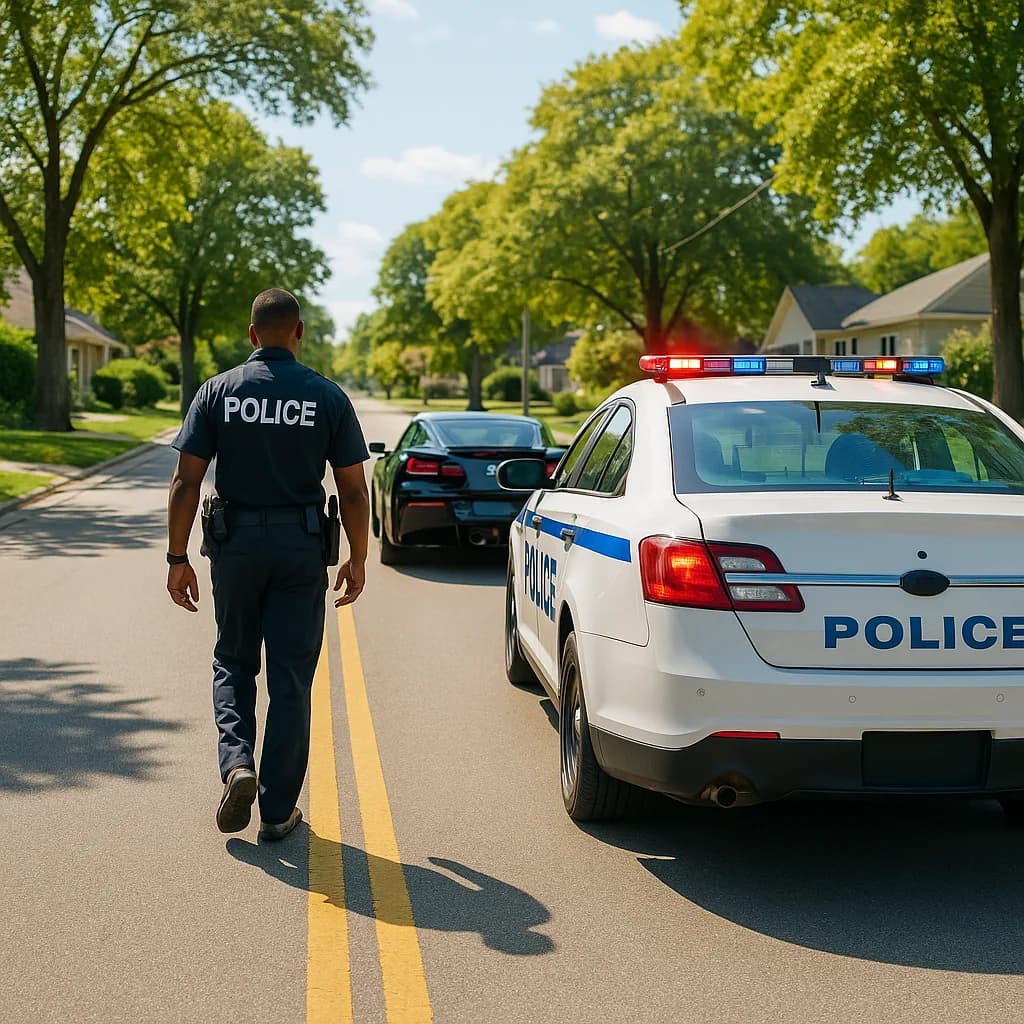
If you still live in Illinois: resolve the underlying violation first. For unpaid tickets, pay the fines and court fees through the issuing county. For uninsured driving, obtain an auto insurance policy from a carrier licensed in Illinois and have the carrier file SR-22 with the Illinois Secretary of State. SR-22 filing is required for 3 years after uninsured driving or license suspension triggers. The carrier charges a one-time filing fee set by the carrier; Illinois does not charge a separate SR-22 fee. Once the violation is resolved and SR-22 is on file, pay the $70 reinstatement fee to the Secretary of State. The plate suspension lifts within 5 business days, and you can renew registration.
If you moved to another state: the Illinois plate suspension remains active on the vehicle's VIN until you clear it, but you cannot register the vehicle in your new state until both the Illinois suspension and your home-state driver's license suspension are lifted. Clear the Illinois plate suspension using the same pathway above: resolve the violation, file SR-22 with Illinois if required, and pay the $70 reinstatement fee. Then address your home-state driver's license suspension separately. Your home state controls the driver's license reinstatement pathway and may require its own SR-22 filing, reinstatement fee, and waiting period. The two suspensions do not lift simultaneously—you must clear both independently.
Related Articles





SR-22 Filing Mechanics for Out-of-State Residents
Illinois requires SR-22 filing for 3 years after uninsured driving, license suspension, or safety responsibility violations. If you live in another state but need to clear an Illinois plate suspension, you must file SR-22 with the Illinois Secretary of State even though you no longer reside in Illinois. Most carriers licensed in Illinois will file SR-22 for out-of-state residents, but you need a policy that meets Illinois minimum liability limits: $25,000 bodily injury per person, $50,000 bodily injury per accident, and $20,000 property damage.
The complication arises when your home state also requires SR-22 for the same violation. Illinois reports the violation through DLC, your home state suspends your driver's license, and your home state may require SR-22 filing with its own DMV. You cannot use the same SR-22 filing for both states. Each state requires a separate SR-22 filing with a carrier licensed in that state. This means you may need two policies: one covering the vehicle registered in your home state with SR-22 filed to your home-state DMV, and one covering the Illinois SR-22 requirement even if you no longer drive the vehicle in Illinois.
Some carriers write non-owner SR-22 policies specifically for this scenario. A non-owner policy provides liability coverage when you drive a vehicle you do not own and allows the carrier to file SR-22 with Illinois without requiring you to insure a specific vehicle. This is the most cost-effective path when you have moved out of Illinois, sold the vehicle, or registered it in your home state. Carriers writing non-owner SR-22 in Illinois include Bristol West, Dairyland, Elephant, GAINSCO, Geico, Infinity, Kemper, Mercury General, National General, Progressive, The General, and USAA.
Illinois SR-22 Filing Period
3 years
Illinois requires continuous SR-22 filing for 3 years after uninsured driving or license suspension. If the policy lapses or cancels during the 3-year period, the carrier notifies the Secretary of State and the suspension reinstates automatically.
625 ILCS 5/7-315
Home-State Reinstatement Runs on a Separate Timeline
Clearing the Illinois plate suspension does not lift your home-state driver's license suspension. Your home state received the DLC report and imposed its own suspension under its own laws. The reinstatement pathway in your home state follows that state's rules: its own reinstatement fee, its own SR-22 filing requirement, its own waiting period, and its own documentation requirements.
Most home states require you to clear the Illinois suspension first before they will lift the home-state suspension. This creates a two-step sequence: resolve Illinois, then resolve your home state. The Illinois reinstatement fee is $70. Your home-state reinstatement fee varies by state and can range from $50 to $500 depending on the violation and the state's fee structure. You pay both fees separately. The SR-22 filing period in your home state may differ from Illinois's 3-year requirement. Some states require 2 years, others require 5 years. The longer period controls your total SR-22 obligation.
Compare Carriers That Write Your Situation
Illinois plate suspension combined with out-of-state residency pushes you into the non-standard auto insurance market. Standard carriers typically decline to write policies for drivers with active suspensions or SR-22 filing requirements, and the cross-state filing complexity narrows the field further. Focus on carriers that explicitly write non-owner SR-22 policies and operate in both Illinois and your home state.
Carriers confirmed to write non-owner SR-22 in Illinois include Bristol West, Dairyland, Elephant, GAINSCO, Geico, Infinity, Kemper, Mercury General, National General, Progressive, The General, and USAA. Not all of these carriers operate in every state, so cross-reference the list against your home state's licensed carriers. Request quotes from at least three carriers to compare monthly premiums. Rates vary significantly by carrier, age, violation history, and county. Estimates based on available industry data suggest high-risk drivers in Illinois pay $227 to $337 per month after a DUI or uninsured driving suspension, but individual rates vary by driving history, vehicle, coverage selections, and location.
When comparing quotes, confirm the carrier will file SR-22 with both Illinois and your home state if both filings are required. Some carriers will file in multiple states; others will not. Clarify the filing fee, the monthly premium, and the total policy term before binding coverage. The cheapest monthly premium is not always the best value if the carrier charges higher filing fees or requires a 6-month prepayment.