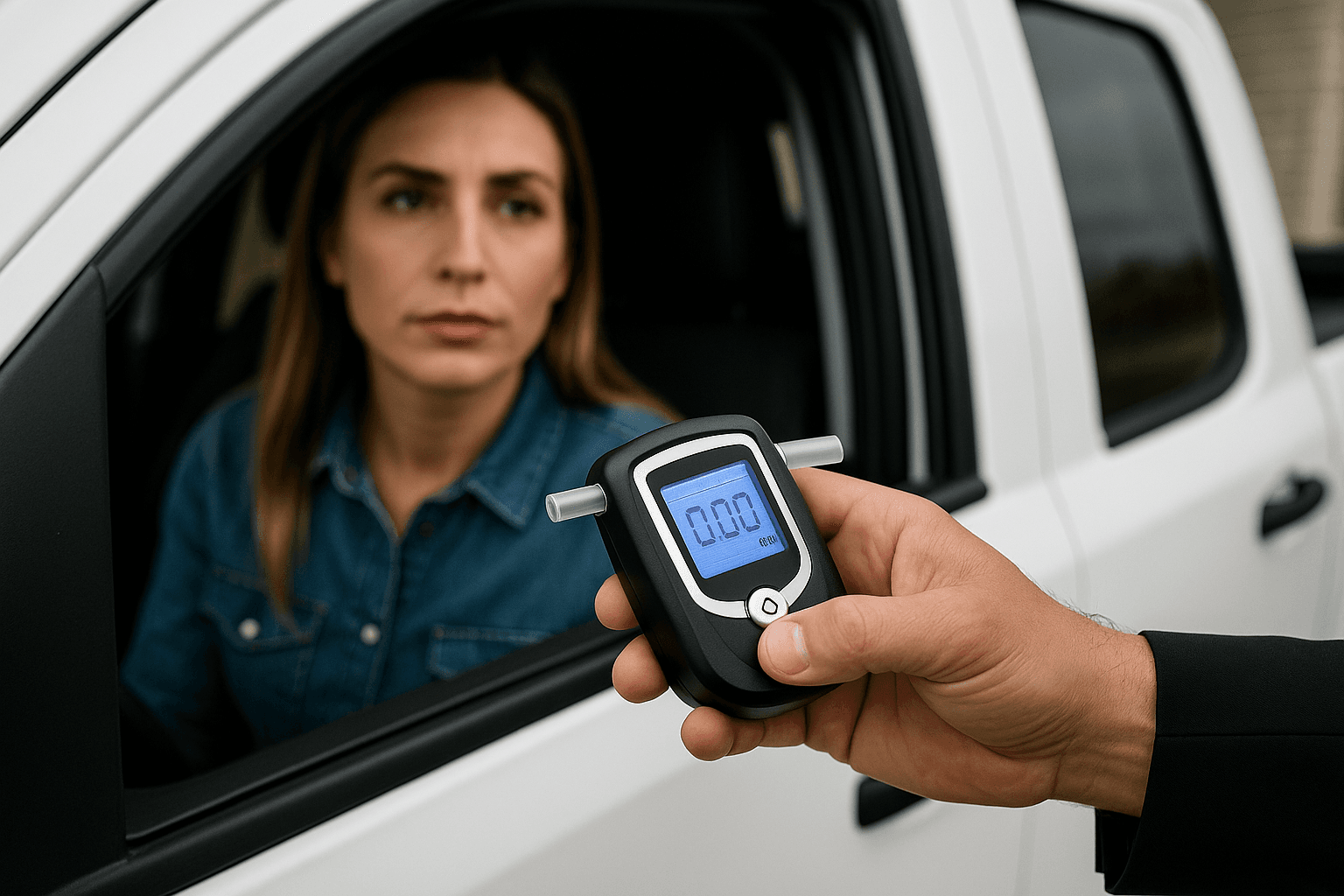
Your Conviction Reported Before You Left the Courthouse
You received a DUI in Florida, live in Georgia, and assumed the conviction stayed in Florida. Three months later, Georgia suspended your license. The Driver License Compact reported the conviction the week after your Florida court date, and Georgia imposed home-state sanctions automatically. You never received a notice explaining why because Georgia considers out-of-state DUI convictions equivalent to in-state convictions for suspension purposes.
The DLC is a 45-state agreement requiring member states to report and recognize serious traffic convictions. DUI, reckless driving, fleeing police, vehicular manslaughter, driving on suspended license, and making false statements on license applications trigger mandatory reporting. Your home state treats the out-of-state conviction as if it happened locally. The compact exists to prevent drivers from evading consequences by crossing state lines.
Compare car insurance rates in your state
Get quotes from licensed carriers — no obligation, no spam, results in minutes.
Get Your Free QuoteDLC Member States
45 states
Only Wisconsin, Massachusetts, Michigan, Tennessee, and Georgia are non-members as of current interstate compact membership records. Non-membership does not mean non-reporting; these states use parallel AAMVA driver record exchange systems that transmit most violations anyway.
AAMVA Interstate Compact membership directories
Non-Member States Still Report Through Parallel Systems
Wisconsin, Massachusetts, Michigan, Tennessee, and Georgia are not DLC members. Drivers assume this creates a reporting gap. It does not. All five states participate in AAMVA's electronic driver record exchange, which transmits conviction data to other states outside the formal DLC framework. A Michigan DUI still reports to your Ohio home state through AAMVA's Problem Driver Pointer System (PDPS). The reporting delay may be longer, but the conviction arrives.
Georgia's non-membership is particularly confusing because Georgia is a member of the Non-Resident Violator Compact (NRVC), which handles unpaid tickets across state lines. The NRVC is a separate agreement with slightly different membership. A Georgia resident with a Florida DUI will see that conviction report to Georgia through AAMVA, even though neither state uses DLC to transmit it. The structural reality: DLC membership is not the only reporting pathway.
Commercial drivers face federal-level reporting regardless of DLC membership. The Commercial Driver License Information System (CDLIS) is a nationwide database managed by AAMVA that tracks all CDL holders. A DUI in your personal vehicle reports to CDLIS and disqualifies your CDL even if the conviction occurred in a non-DLC state. CDLIS operates independently of state compact membership.
Moving to a non-DLC state does not erase an existing suspension. Your home state controls reinstatement, and DLC member states will not issue you a new license until your home state lifts the suspension.
How DLC Reporting Actually Works

The reporting state sends conviction data through the AAMVA driver record exchange network. Your home state receives a notification that includes the violation type, conviction date, and case disposition. Your home state then applies its own sanctions as if the violation occurred locally. Florida DUI penalties differ from Georgia DUI penalties, but Georgia applies Georgia suspension rules to the Florida conviction once it reports. You do not get the benefit of the reporting state's lighter penalties.
DLC requires member states to treat out-of-state convictions the same as in-state convictions for suspension purposes. If your home state suspends licenses for 6 months after a first DUI, that 6-month suspension applies to your out-of-state DUI even if the conviction state only suspended for 90 days. The compact eliminates forum shopping. You cannot pick a lenient state and expect your home state to honor that state's lighter sanctions.
Related Articles






State-Pair Reporting Patterns and Common Gaps
High-traffic state pairs show consistent reporting patterns. California reports Nevada DUIs within 10 business days. Florida reports Georgia DUIs within 7 business days. New York reports New Jersey DUIs within 14 business days. Texas reports Oklahoma DUIs within 10 business days. These timelines reflect automated electronic transmission through AAMVA networks. Paper-based reporting (used by some jurisdictions for older convictions or when electronic systems fail) can take 30 to 90 days.
Reporting gaps occur when the conviction involves a non-moving violation that does not meet DLC thresholds. Equipment violations, expired registration, and some seatbelt violations do not trigger mandatory DLC reporting. Minor speeding tickets below your state's point threshold may not report either. Each state sets its own reporting criteria within the compact's minimum requirements. A 10-over speeding ticket in Florida may not report to Georgia, but a 20-over reckless driving conviction will.
Non-DLC states create unpredictable gaps. Wisconsin DUIs report to Illinois through AAMVA but may not report to states with weaker electronic data-sharing agreements. Massachusetts OUI convictions report inconsistently to southern states that rely on DLC rather than AAMVA as their primary reporting channel. If you are a Massachusetts resident with a Florida DUI, the conviction reports reliably because Florida pushes data through both DLC and AAMVA. If you are a Florida resident with a Massachusetts OUI, the conviction may take longer to appear because Massachusetts does not use DLC to transmit it.
Typical DLC Reporting Window
7-14 business days
Most DLC member states transmit conviction data within 7 to 14 business days of court disposition. Paper-based reporting or manual data entry extends this to 30-90 days. CDLIS reporting for commercial drivers happens within 10 days regardless of state compact membership.
AAMVA Best Practices for Interstate Data Exchange, 2023
Reinstatement When Two States Are Involved
Reinstatement requires action in both the state that suspended you (the reporting state) and your home state (the receiving state). You must satisfy the reporting state's reinstatement requirements first. Florida requires SR-22 filing, completion of DUI school, payment of reinstatement fees, and proof of an ignition interlock device for certain DUI convictions. Georgia will not lift its home-state suspension until Florida confirms you completed Florida's requirements and lifted the Florida suspension.
The DLC does not automatically transmit reinstatement. You must request that the reporting state send a clearance notice to your home state. This is a manual step in most states. Florida drivers call the Florida DHSMV, request a clearance letter, and ask the DHSMV to transmit it to Georgia through the AAMVA network. Without this transmission, Georgia's suspension remains active even after Florida reinstates you. The reporting state controls the timeline.
What To Do Right Now
Contact your home state DMV and request a full driving record. The record will show which out-of-state convictions have reported and what sanctions your home state imposed. If your home state suspended you for an out-of-state conviction, you need to determine whether the suspension originated from DLC reporting, AAMVA reporting, or CDLIS (for commercial drivers). The suspension notice should name the originating conviction state and case number.
Call the reporting state's DMV and confirm your reinstatement requirements. Ask specifically whether SR-22 filing is required, what the filing duration is, and whether the SR-22 must be filed in the reporting state or your home state. Some states accept SR-22 filed by carriers licensed in your home state; others require in-state carriers. Do not assume your home state's SR-22 satisfies the reporting state's requirement. Verify filing acceptance with both states before purchasing coverage. If you need cross-state SR-22 filing, compare carriers licensed in both states to find coverage that satisfies both jurisdictions without duplicate policies.