
The Georgia DLC Gap Drivers Count On
You received a DUI in Georgia while visiting from Florida, North Carolina, Tennessee, or another home state. You've read that Georgia isn't a Driver License Compact member—one of only five states outside the agreement—and you're wondering whether this means your home state DMV won't find out about the Georgia conviction. The structural reality: Georgia's DLC non-membership removes one reporting channel but leaves two others intact, and most home states will receive notification of your Georgia DUI through AAMVA's parallel driver record exchange or through the Non-Resident Violator Compact ticket-resolution system.
The Driver License Compact requires member states to report out-of-state convictions for serious violations including DUI, reckless driving, fleeing, and license-status fraud. Forty-five states are members; the five non-members are Wisconsin, Massachusetts, Michigan, Tennessee, and Georgia. Georgia's absence from DLC means it does not automatically transmit conviction data through the DLC reporting channel—but Georgia is a member of the Non-Resident Violator Compact, participates in AAMVA's Problem Driver Pointer System, and maintains bilateral reporting agreements with neighboring states. This creates a reporting structure where most out-of-state DUI convictions still reach home-state DMVs, just through a different pathway than DLC drivers expect.
Compare car insurance rates in your state
Get quotes from licensed carriers — no obligation, no spam, results in minutes.
Get Your Free QuoteDriver License Compact Members
45 states
The five non-members are Wisconsin, Massachusetts, Michigan, Tennessee, and Georgia. Non-membership removes the DLC automatic reporting channel but does not prevent home-state notification through AAMVA or NRVC pathways.
AAMVA Driver License Compact state membership list
Three Reporting Channels That Operate Independent of DLC
AAMVA operates the Problem Driver Pointer System, a national database that tracks driver records across jurisdictions. When Georgia courts enter a DUI conviction, the conviction posts to the PDPS index even though Georgia does not participate in the Driver License Compact. Home-state DMVs query PDPS during license renewals, random audits, and when processing out-of-state conviction notices from other sources. A Florida driver with a Georgia DUI will typically see the conviction surface on their Florida driving record within 30 to 90 days of the Georgia court disposition, triggered by PDPS notification rather than DLC reporting.
The Non-Resident Violator Compact creates a second channel. Georgia is an NRVC member, which means failure to resolve a Georgia traffic citation—including DUI citations—triggers a license hold in the driver's home state if that state is also an NRVC member. Forty-five states participate in NRVC; the five non-members are Wisconsin, Michigan, Montana, Tennessee, and Oregon. If you ignore a Georgia DUI citation or fail to appear for court, Georgia notifies your home-state DMV through NRVC, and most home states will suspend your license until you resolve the Georgia case.
Bilateral agreements between Georgia and neighboring states create a third reporting pathway. Georgia maintains direct data-sharing agreements with Florida, Alabama, South Carolina, North Carolina, and Tennessee that operate independent of DLC or AAMVA. These agreements ensure conviction records transmit between states regardless of compact membership. A South Carolina driver convicted of DUI in Georgia will see the conviction reported to South Carolina DMV through the bilateral agreement, not through DLC.
Georgia's DLC non-membership removes one reporting channel but leaves AAMVA PDPS, NRVC, and bilateral agreements intact—most home states still receive notification.
What Georgia DUI Convictions Trigger at Home
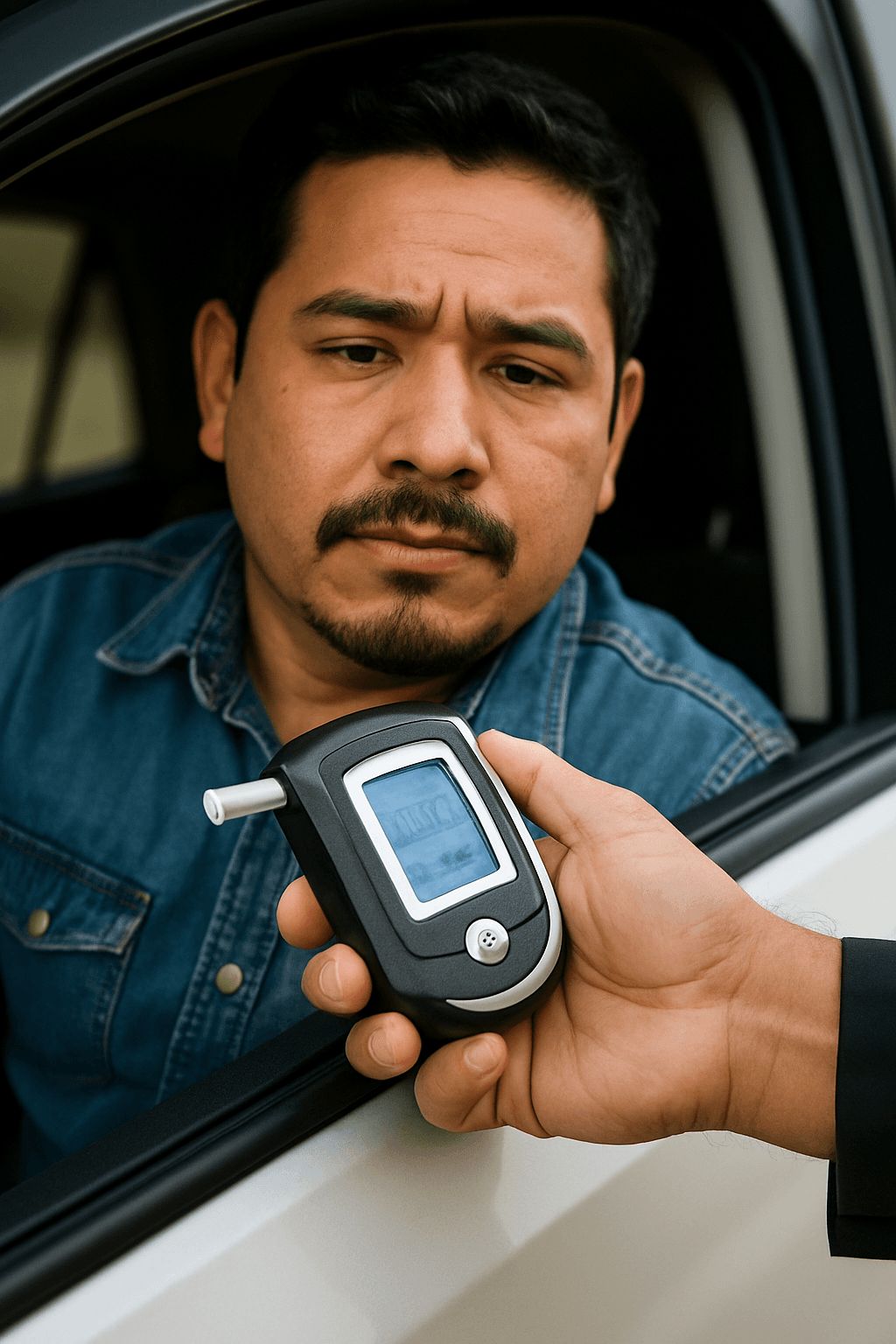
Driver License Compact member states impose home-state suspension consequences on out-of-state DUI convictions reported through DLC. Because Georgia is not a DLC member, the home state must receive the Georgia conviction through AAMVA PDPS query or bilateral agreement rather than DLC transmission. The practical result is identical: the home state suspends your license based on the out-of-state conviction once it posts to your driving record. Florida suspends a Florida license for one year on receipt of a first-offense Georgia DUI. North Carolina imposes a 12-month suspension on North Carolina residents convicted of DUI in any state, reported through AAMVA PDPS when DLC does not apply. Virginia follows the same pattern. The DLC non-membership does not shield you from home-state suspension consequences; it only changes the reporting pathway the home state uses to learn about the conviction.
NRVC creates immediate consequences before conviction if you fail to resolve the Georgia citation. Most NRVC member states suspend the driver's home-state license when Georgia reports a failure to appear or failure to pay. This suspension lifts only when Georgia notifies the home state that the case is resolved. A Texas driver who ignores a Georgia DUI citation will face a Texas license suspension within 30 days of Georgia's NRVC notification, independent of the eventual conviction outcome. The NRVC hold operates as leverage to force resolution of the Georgia case—it is not the same as the post-conviction suspension the home state will impose once Georgia reports the DUI disposition.
Related Articles






The Rare Scenario Where Georgia Non-Membership Matters
Georgia's DLC non-membership creates a reporting gap only when both the conviction state and the home state are DLC non-members, and no bilateral agreement exists between them. A Michigan driver convicted of DUI in Georgia represents this rare scenario: Michigan is not a DLC member, Georgia is not a DLC member, and the two states do not share a bilateral reporting agreement. The conviction will still post to AAMVA PDPS, but Michigan DMV must actively query PDPS to discover it. If Michigan does not query PDPS before the driver's next license renewal, the Georgia conviction may not trigger Michigan suspension consequences immediately.
Wisconsin and Massachusetts drivers face a similar gap. Both states are DLC non-members with no direct bilateral agreements with Georgia. The Georgia DUI posts to AAMVA PDPS, but whether it surfaces on the Wisconsin or Massachusetts driving record depends on when those states query PDPS. Most states query PDPS during license renewals, CDL medical certificate updates, and random compliance audits, so the conviction will eventually surface—but the timeline is less predictable than DLC or bilateral-agreement reporting.
Commercial drivers with CDLs face no reporting gap regardless of DLC membership. The Commercial Driver License Information System operates federally and posts all DUI convictions to the national CDL record within 10 days of disposition, independent of state compact membership. A CDL holder convicted of DUI in Georgia will see the conviction on their CDLIS record immediately, triggering federal disqualification rules that apply nationwide. CDLIS closes the AAMVA query gap for commercial drivers.
CDLIS Conviction Posting Window
10 days
Commercial Driver License Information System posts all DUI convictions to the federal CDL record within 10 days of court disposition, independent of state Driver License Compact membership or bilateral agreements.
FMCSA CDLIS State Procedures Manual, 49 CFR 384.231
How Reinstatement Works Across the Georgia Non-DLC Boundary
When Georgia suspends your Georgia driving privileges after a DUI conviction and your home state suspends your home-state license based on AAMVA or NRVC notification, you face two separate reinstatement processes. Georgia controls the Georgia suspension; your home state controls the home-state suspension. Reinstating in Georgia does not automatically lift the home-state suspension—you must satisfy both states' requirements independently.
Georgia requires completion of the DUI Alcohol or Drug Use Risk Reduction Program, payment of the Georgia reinstatement fee, and SR-22 proof of insurance filed with Georgia Department of Driver Services. Once you satisfy Georgia's requirements, Georgia lifts the Georgia suspension and notifies AAMVA PDPS that the Georgia case is resolved. Your home state queries PDPS and sees that Georgia's suspension is lifted, but the home state does not automatically lift its own suspension. You must then satisfy your home state's reinstatement requirements—which typically include a separate reinstatement fee, proof of completion of your home state's DUI program if required, and SR-22 filing with your home-state DMV. Only after both states lift their respective suspensions can you legally drive in either jurisdiction.
Florida residents face a common failure mode: they complete Georgia reinstatement, assume their Florida license is automatically reinstated because Georgia lifted its suspension, and then discover Florida still shows an active suspension. Florida requires Florida reinstatement fees, Florida DUI school completion if the Florida suspension exceeds 90 days, and SR-22 filing with Florida DHSMV. Georgia's reinstatement does not satisfy Florida's requirements. The reverse also applies: completing Florida reinstatement does not lift the Georgia suspension if Georgia's suspension is still active.
Compare Carriers Filing SR-22 in Both States
When you face dual suspensions in Georgia and your home state, you need SR-22 proof of insurance filed with both DMVs. Not all carriers write SR-22 policies in Georgia, and not all Georgia SR-22 carriers are licensed in your home state. Geico, Progressive, and State Farm write SR-22 coverage in Georgia and maintain licenses in all 50 states, making them the most reliable options for dual-state SR-22 filing. Dairyland, GAINSCO, and The General write non-standard SR-22 policies in Georgia and cover most home states, though you must verify your specific state is within their footprint. Carriers licensed in both states can file SR-22 with both DMVs under a single policy, simplifying the compliance process and avoiding the need to maintain separate policies for each state.
Verify your home state accepts Georgia-filed SR-22 before assuming a single filing satisfies both requirements. Most states accept out-of-state SR-22 filings as long as the carrier holds a valid license in the state that issued the SR-22 form, but a few states require the SR-22 to be filed by a carrier licensed in the driver's state of residence. North Carolina and Virginia fall into this category—they require SR-22 filed by a carrier licensed in North Carolina or Virginia respectively, even if the suspension originated in Georgia. Check your home-state DMV's SR-22 rules before selecting a carrier to avoid filing with a Georgia carrier that your home state will not accept.